
Why Is Water Collecting Near My Foundation After Heavy Rain?
Water that repeatedly remains beside a home after rainfall deserves attention, especially when the soil stays soft or runoff is being released close to the exterior wall. The first step is not to assume foundation damage. It is to observe where the water comes from, how it moves, and how long the area remains wet.
A homeowner in Riverview, Florida asked:
After heavy rain, water collects along one side of my house near the foundation and stays there for several hours. The ground in that area feels softer than the rest of the yard, and I have noticed a small amount of staining near the bottom of the exterior wall.
The gutter above this area does not appear to be overflowing, but the downspout releases water only a few feet from the house. I have not noticed water inside the home, cracks in the wall, or any unusual odors. What should I check first, and what warning signs would suggest that I should call a professional?
The question was edited for clarity, privacy, and length. Personal contact information was not published.
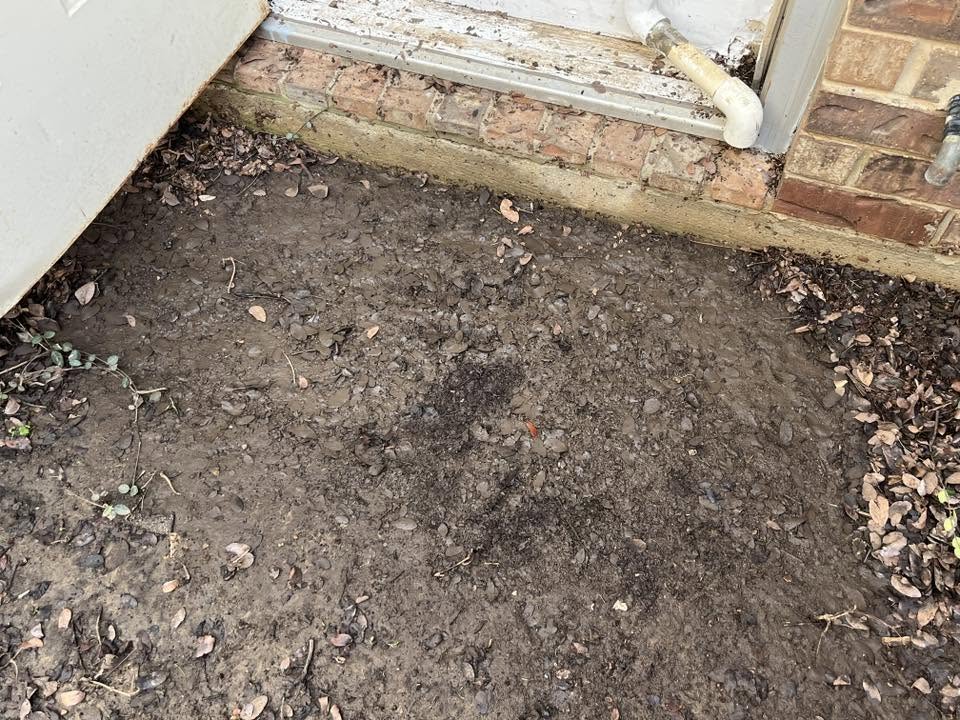 Homeowner-Submitted Photo
Begin outside during or shortly after a normal rain, but only from a safe location. Watch where the downspout releases water, whether the water moves away from the house, and whether the ground forms a shallow low point beside the wall.
Because the downspout reportedly ends only a few feet from the house, that discharge point is the most practical place to start. The water may be leaving the gutter correctly but still ending up too close to the foundation area.
1. Observe the Downspout Discharge
A gutter can appear to work normally while still directing a large volume of roof runoff into an unsuitable location. During rain, look at the end of the downspout and note what happens after the water exits.
Does the water immediately move away from the house?
Does it flow back toward the wall after leaving the outlet?
Is the extension disconnected, crushed, missing, or too short?
Does the discharge create a visible channel or eroded area?
A longer, properly positioned extension may help in some situations, but it should discharge to a location where the water can continue moving safely without creating a new problem for a walkway, neighboring property, septic area, retaining wall, or lower section of the yard.
2. Look at the Ground Slope Beside the House
The soil immediately around a home should generally encourage surface water to move away from the structure. A shallow depression may be difficult to notice when the ground is dry but become obvious after rainfall.
Look for:
- A visible dip between the wall and the surrounding yard
- Mulch, soil, or landscaping that holds water against the house
- Areas where erosion has changed the original grade
- Hardscape that directs runoff toward the wall
- Settlement around utility lines, drains, or previous excavation
Do not simply pile loose soil against the wall without understanding the exterior construction. Soil, mulch, and landscaping materials should not cover siding, drainage openings, weep holes, vents, or other components intended to remain exposed.
3. Determine Whether This Is a Localized Low Spot
The fact that water collects along only one side of the home may indicate a localized drainage condition rather than a problem around the entire property.
Compare the wet area with nearby sections of the yard. Notice whether the surrounding ground dries normally while this area remains soft. Also observe whether runoff is arriving from another source, such as:
- A neighboring section of roof
- A driveway, patio, walkway, or pool deck
- An air-conditioning condensate discharge
- A landscape irrigation zone
- A yard drain that is blocked or draining slowly
- A higher area of the property
4. Check the Gutter Without Climbing
The homeowner reported no obvious gutter overflow, which is useful information. Still, the gutter system should be observed from the ground during rain when it is safe to do so.
Watch for water spilling over one section, escaping behind the gutter, leaking at a seam, or running down the exterior wall. A partial blockage can sometimes redirect water without producing dramatic overflow across the entire gutter.
Do not climb onto the roof or use a ladder during wet weather.
Wet roofing, saturated soil, wind, lightning, and slippery ladder feet can create serious hazards. Ground-level observation is enough for the initial review.
5. Pay Attention to How Long the Soil Stays Wet
Soil type and recent weather affect drying time. A single heavy storm after an already wet period can leave many yards saturated. The more useful clue is whether the same spot repeatedly stays wet much longer than nearby areas.
Persistent softness may be associated with concentrated runoff, compacted soil, poor surface grading, slow-draining soil, a buried drainage issue, irrigation, or another water source. It should not be treated as proof of a foundation defect.
6. Document the Exterior Staining
The staining near the bottom of the wall should be photographed in consistent lighting and checked after future rainfall. The important question is whether it remains unchanged, becomes darker, spreads upward, or is accompanied by deterioration.
Exterior staining can be associated with repeated splashback, soil contact, algae, dirt, irrigation, drainage, or prolonged dampness. Appearance alone does not identify the source.
Create a simple rainfall record
A few dated observations can be more useful than trying to remember how the area looked several weeks earlier.
Warning Signs That Deserve Faster Attention
No interior water, cracks, or unusual odors were reported in this submission. That is helpful, but the area should still be monitored. Seek a qualified local evaluation sooner when any of the following appear:
Water enters the home
Moisture appears inside, below flooring, around baseboards, or in a crawlspace or basement.
New cracks or movement
Cracks appear or change, doors begin sticking, or nearby surfaces show movement.
Ongoing erosion
Soil is washing away, creating channels, exposing material, or leaving voids.
Persistent dampness
The area stays wet between storms or becomes damp when there has been no recent rain.
Odor or visible growth
Musty odors, fungal growth, or worsening staining develops inside or outside.
Drainage affects utilities
Standing water reaches electrical equipment, service components, wells, septic areas, or other vulnerable systems.
When Professional Help May Be Appropriate
The most relevant professional depends on what the observations show. A gutter professional may be appropriate when the water is clearly concentrated by the roof drainage system. A drainage or grading contractor may be more relevant when the yard forms a low area or directs surface runoff toward the home.
A qualified foundation, structural, waterproofing, plumbing, septic, irrigation, or inspection professional may be needed when there are additional warning signs or when the water source cannot be identified from safe surface observations.
Avoid hiring solely from a remote diagnosis or a single photograph. The person evaluating the property should inspect the runoff path, surrounding grade, exterior wall, nearby drainage components, and relevant interior areas before recommending work.
Questions to Ask Before Approving Drainage Work
What evidence shows where the water is coming from?
Is the proposed work correcting the source or only moving water?
Where will the water discharge after the work is completed?
Could the change affect neighboring property or another system?
Are permits, utility markings, or drainage approvals required?
How will the completed work be tested during or after rainfall?
Document one or two rainfall events before making assumptions
Based on the submitted description, the downspout discharge and the shape of the ground beside the home are the best starting points. Photograph the area before, during, and after rain, note how the water travels, and record how long the soil remains saturated.
Those observations can help determine whether a simple runoff issue is visible or whether an on-site professional evaluation is warranted.
Editorial and Safety Note
This answer is educational and is based only on the homeowner’s written description and submitted photograph. Home Maintenance Today has not inspected the property and is not diagnosing a foundation, drainage, structural, plumbing, or waterproofing condition.
Local building conditions, soil, drainage rules, climate, utilities, and construction details vary. Stop and seek qualified local help when observations suggest an immediate safety risk, active water intrusion, significant erosion, structural movement, sewage, electrical exposure, or another urgent condition.
Your observation could help another homeowner.
Submit a clear description and optional photographs for private editorial review. Approved questions may become future educational articles, guides, checklists, or tools.