
Why Is Water Seeping Through the Tile Grout in My Basement?
Water appearing along one or two grout lines in a finished basement usually means moisture is reaching the underside of the tile and finding an accessible path to the surface. The grout may be where the water becomes visible, but it is not necessarily the source of the problem.
I have a ranch home with a tiled finished basement. It has not rained much during the last week, although there was heavy rain earlier in the month.
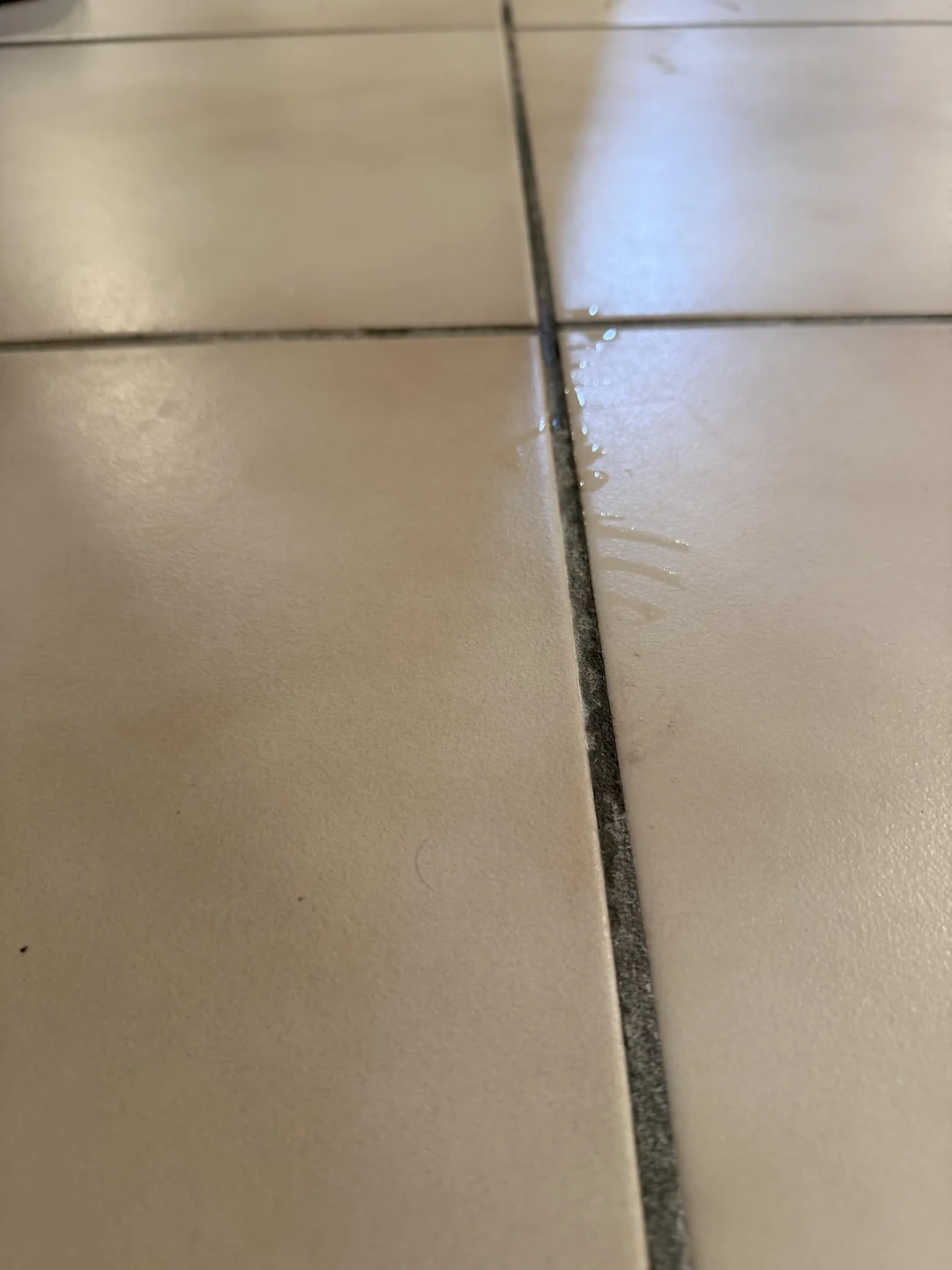
I keep finding one or two grout lines slowly seeping water. The basement has two ejector pits and an overhead sewer system. During heavy rainfall over the last few years, I have also had seepage from one or two basement walls.
Is water coming through the tile grout something to be concerned about, and what should I check first?
What to Check First
The first goal is to determine whether the moisture is associated with rainfall, plumbing use, basement equipment, or one particular area beneath the finished floor.
Dry and Mark the Wet Area
Use disposable towels to dry the visible water. Mark the ends of the wet grout lines with removable painter’s tape and note the date and time.
Check whether moisture returns in minutes, several hours, overnight, or only after rain or water use elsewhere in the house.
Identify What Is Nearby
Note whether the affected grout is close to an exterior foundation wall, floor drain, bathroom, laundry area, utility sink, water heater, HVAC equipment, ejector pit, or plumbing pipe.
Proximity does not prove the source, but it helps determine which systems should be evaluated first.
Compare the Timing With Rain
Record recent rain dates and whether the moisture appears during rain, shortly afterward, or several days later.
Moisture beneath a slab or finished floor may not become visible at the same time rain is falling, so delayed appearance is still worth documenting.
Compare the Timing With Plumbing Use
Note whether the seepage changes after showers, laundry, dishwasher use, toilet flushing, utility-sink use, or operation of basement plumbing fixtures.
Do not repeatedly operate a fixture if doing so clearly increases the water.
Possible Sources of the Water
Moisture Moving Beneath the Basement Slab
Water beneath or around a basement floor may move toward a crack, joint, low area, penetration, or opening beneath the finished tile. It can then appear at the grout surface.
This possibility becomes more relevant when the home also has a history of basement-wall seepage during heavy rain. It still cannot be confirmed without evaluating the slab, perimeter, drainage, and finished-floor assembly.
Water Entering at the Wall-and-Floor Joint
Moisture can enter near the joint where the foundation wall meets the basement floor and travel underneath tile before appearing in a more visible grout line.
Check whether baseboards, lower drywall, flooring edges, or grout near exterior walls show dampness, staining, swelling, or musty odors.
A Plumbing Supply or Drain Leak
A concealed supply pipe, drain connection, fixture, or appliance may release water beneath the floor. Plumbing becomes more suspicious when seepage continues during dry weather or changes with water use.
Water that is warm, has an odor, contains residue, or appears after a specific fixture is used should be reported to a qualified plumber promptly.
Moisture Associated With an Ejector Pit or Piping
Having ejector pits and an overhead sewer does not by itself explain the floor seepage, and it does not rule out other water sources.
An ejector lid, seal, pipe connection, check valve, discharge line, or nearby plumbing should be evaluated when the wet area is close to a pit or when moisture changes as basement fixtures are used.
Water Trapped Beneath the Tile
Water that previously entered from a wall, slab, plumbing leak, or another source may remain beneath a low-permeability finished floor and emerge gradually through grout.
In that situation, the visible amount at the surface may be smaller than the damp area beneath the tile.
Condensation or Surface Moisture
High basement humidity can create damp surfaces, but true beads of water repeatedly emerging from specific grout lines are different from general surface condensation.
Compare the affected lines with the surrounding tile. If only the grout becomes wet from below while nearby surfaces remain dry, another moisture source deserves investigation.
How to Distinguish Rain-Related Seepage From Plumbing
- The moisture appears after heavy or prolonged rain.
- Past seepage has occurred at exterior basement walls.
- The wet area is near the foundation perimeter.
- Water appears without recent use of nearby plumbing.
- The amount changes with wet and dry weather periods.
- Moisture continues through an extended dry period.
- The amount increases after a particular fixture is used.
- The water is warm, discolored, soapy, or has an odor.
- The affected area is near plumbing or an ejector pit.
- A water meter shows unexplained use when fixtures are off.
These patterns are clues, not proof. More than one condition can be present at the same time.
Does the Overhead Sewer Rule Out Basement Water Problems?
No. An overhead sewer arrangement relates to how wastewater leaves the basement and may help address certain sewer-backup risks. It does not prevent rainwater, groundwater, foundation seepage, supply-pipe leaks, or water trapped beneath finished flooring.
Likewise, the presence of ejector pits does not confirm that the visible water is sewage. The source should be identified before the water is handled extensively or the floor is repaired.
What Not to Assume
The grout may simply be the easiest path for water already present beneath the tile.
Water can remain beneath a slab or finished floor and appear after the heaviest rain has passed.
The photograph does not identify the water source or establish contamination.
Sealing the visible exit point may hide the symptom or redirect the water without correcting its source.
Safe Steps You Can Take Now
-
Limit contact with the water
Until the source is identified, avoid direct skin contact and keep children and pets away from the wet area.
-
Protect nearby belongings
Move boxes, furniture, rugs, electronics, and absorbent materials away from the affected floor.
-
Dry only the visible surface
Use disposable towels for a small amount of clear water. Do not use household vacuums or electrical equipment on a wet floor.
-
Photograph and measure the area
Place removable tape near the wet-line boundaries and record whether the area expands.
-
Note odors and appearance
Record whether the water is clear, cloudy, discolored, oily, warm, or accompanied by a sewage or musty odor.
Warning Signs That Need Prompt Attention
- The wet area is spreading beneath multiple tiles.
- Water continues appearing during an extended dry period.
- The amount increases after plumbing fixtures are used.
- The water is discolored, warm, oily, cloudy, or foul-smelling.
- An ejector pit is overflowing, leaking, cycling abnormally, or emitting odor.
- Tile begins lifting, cracking, sounding hollow, or becoming loose.
- Baseboards, drywall, cabinets, or framing become damp or swollen.
- Visible growth or persistent musty odors develop.
- Water approaches electrical outlets, appliances, wiring, or the service panel.
- Wall seepage and floor seepage occur at the same time.
When Qualified Local Help May Be Appropriate
An on-site evaluation is appropriate when water repeatedly appears through grout, the source is not obvious, the basement has a history of wall seepage, or moisture may be trapped beneath a finished floor.
The investigation should identify the source before the tile or grout is repaired. Otherwise, surface work may conceal the problem temporarily while moisture continues beneath the floor.
Licensed Plumber
May be appropriate for supply lines, drains, basement fixtures, ejector pits, overhead-sewer components, and unexplained water use.
Basement Waterproofing or Foundation Professional
May be relevant when moisture follows rainfall, enters at walls or floor joints, or appears to be moving beneath the slab.
Qualified Water-Intrusion Inspector
May help compare plumbing, exterior drainage, slab, wall, and finished-floor moisture without assuming one source in advance.
Water-Damage or Flooring Professional
May be needed after the source is corrected to determine how far moisture traveled beneath the tile and whether materials require drying or replacement.
Questions to Ask Before Approving Work
- What evidence identifies the likely source of the water?
- Could the moisture be traveling beneath the tile from another location?
- Was the ejector system and nearby plumbing checked?
- Does the timing suggest rainfall, plumbing use, or both?
- Is moisture present beneath adjacent tiles or wall finishes?
- Will any tile need to be lifted to inspect the floor below?
- How will the area be dried after the source is corrected?
- Is the water considered potentially contaminated?
- What prevents the condition from returning?
- Should exterior drainage or previous wall seepage be evaluated separately?
Information Worth Documenting
Record when the grout first becomes visibly wet.
Note heavy rain dates and the delay before seepage appears.
Record showers, laundry, toilet use, and basement fixture use.
Describe color, clarity, temperature, residue, and odor.
Measure how many grout lines or tiles are affected.
Note unusual ejector-pump sounds, cycling, odors, or standing water.
Investigate the Water Source Before Repairing the Grout
Yes, repeated water seepage through basement grout is worth addressing. It does not automatically mean severe foundation damage or sewage, but it indicates that moisture is present beneath or beside the finished floor.
Dry and mark the area, compare its return with rainfall and plumbing use, and note its distance from exterior walls, fixtures, and ejector pits. Because the basement has also experienced wall seepage during heavy rain, both exterior water entry and plumbing-related sources should remain under consideration.
Do not solve the problem by applying grout sealer alone. A qualified local professional should identify where the water is coming from and determine whether moisture has spread beneath adjacent tile or wall finishes.
Tell Us What You Are Seeing
Submit your question, observations, and optional photographs. We may turn the submission into an educational homeowner resource while protecting your personal information.